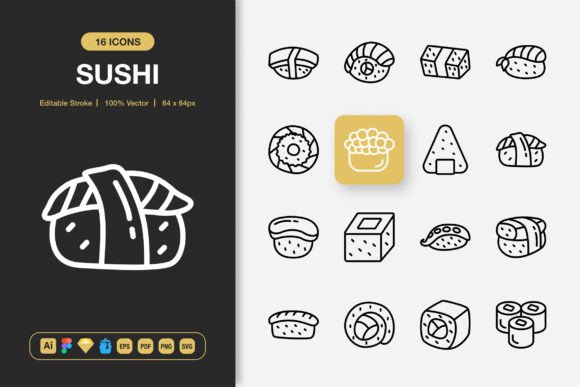
Sushi Icons - Minimalist Graphics for Digital and Print Projects
As someone who regularly creates digital products for Etsy, Shopify, and print-on-demand platforms, I always look for graphic design assets that can elevate the visual appeal of my listings. Recently, I came across Sushi Icons, a set of high-quality icons that promises to be versatile for any project. Let me walk through how this icon set fits into real-world selling scenarios.
First Impressions: Mood and Niche Appeal
The Sushi Icons immediately struck me as playful yet clean. The minimalist icon design feels modern and adaptable, making it suitable for both casual and professional contexts. These icons have a distinct visual personality that leans toward festive and decorative elements without being overly whimsical. This makes them ideal for niche markets like food-related businesses, Japanese-themed shops, or even seasonal collections around holidays or events.
If you're targeting an audience that appreciates cute, colorful, and culturally inspired visuals, these icons could attract buyers looking for something unique but not too niche. They feel more like a general-purpose graphics set with a specific flavor rather than a very limited-use asset.
Real-World Applications in Product Selling
One of the first things I considered was how I could use Sushi Icons across different product types. Here are some practical examples:
- SVG Products: These icons would work well as standalone SVG designs or as part of larger illustrations for digital downloads.
- PNG Designs: Perfect for clipart bundles, social media templates, or printable wall art where transparency is needed.
- Sublimation Designs: Their clean lines and bold shapes make them great for t-shirt graphics, mugs, and tote bags.
- Canva Templates: Easily integrated into Canva projects for blog headers, Instagram posts, or promotional flyers.
- Cricut Projects: With clear outlines, they could be used for sticker designs, planner inserts, or scrapbooking kits.
- Digital Paper Packs: Pair them with patterned backgrounds for a cohesive look in printable stationery or greeting cards.
These icons also have potential in themed bundles, such as a "Japanese Festival" collection or a "Foodie Design Pack." They add visual interest without overwhelming the layout, which is crucial for maintaining brand consistency and visual hierarchy in your product listings.
Enhancing Product Presentation
When preparing product listings, the right graphics can significantly impact customer trust and click-through rates. Sushi Icons could be used in several ways to enhance presentation:
- Mockup Previews: Use them in mockups to showcase how they'd look on merchandise or in digital layouts.
- Thumbnail Appeal: Incorporate them into thumbnails to draw attention and convey the theme of your product quickly.
- Listing Images: Add them to listing images for visual storytelling, especially when showcasing printable products or design bundles.
- Seasonal Collections: They’re perfect for creating themed bundles that align with cultural events or food-related seasons.
By using these icons strategically, you can create a more engaging and professional-looking online shop that stands out in crowded marketplaces like Etsy or Creative Fabrica.
Where Sushi Icons Work Best
While Sushi Icons are versatile, they shine in certain areas. Here’s where they perform best:
- Large Product Previews: Their bold style works well in large-scale designs, like posters or packaging.
- Themed Bundles: Ideal for creating cohesive design packs around food, festivals, or culture.
- Decorative Layouts: Add visual flair to digital paper packs, planners, or greeting cards without overpowering the design.
- Printable Products: Their clarity ensures they look good in both digital and printed formats.
- Social Media Promos: Great for Instagram posts, Pinterest pins, or Facebook ads with a fun, eye-catching vibe.
Areas to Approach with Caution
Like any graphic design asset, there are situations where Sushi Icons might not be the best fit:
- Tiny Sticker Details: Their size and detail may not scale well for small stickers or intricate cutouts.
- Overly Complex Layouts: Avoid using too many icons in one design; they can become cluttered.
- Low-Resolution Print Products: Ensure the file resolution is high enough for quality prints.
- Crowded Thumbnails: Keep thumbnails simple so the icons don’t get lost in the background.
- Dark Backgrounds: Test how the icons appear against dark colors to ensure visibility and contrast.
- Text-Heavy Templates: Balance the use of icons with text to maintain readability.
Practical Seller Notes
Before publishing a listing, I recommend testing Sushi Icons thoroughly. Here are some steps I take:
- Test on Real Mockups: See how they look on actual products like mugs or t-shirts.
- Preview as Marketplace Thumbnail: Make sure they stand out and convey the right message at a glance.
- Check Background Compatibility: Ensure they look good on both white and dark backgrounds.
- Test Print Colors: Confirm that the colors translate well when printed.
- Verify PNG Transparency: Important for overlays and layered designs.
- Inspect SVG Cut Quality: Especially if you plan to use them in Cricut or Silhouette projects.
- Confirm File Resolution: High-resolution files are essential for print-on-demand and digital downloads.
- Organize Files Clearly: Help customers by grouping related icons or themes.
- Pair with Fonts: Test them with serif, sans serif, script, handwritten, and display fonts to see what looks best.
- Confirm Commercial Licensing: Always check the license terms before selling finished products.
In summary, Sushi Icons offer a versatile and visually appealing option for digital product creators and sellers. Whether you're building a new collection for Etsy, designing Canva templates, or creating print-on-demand merchandise, these icons can help elevate your product presentation and attract the right audience. Just be sure to test them thoroughly and use them in ways that highlight their strengths while avoiding potential pitfalls.